INSIDE THE STORY.
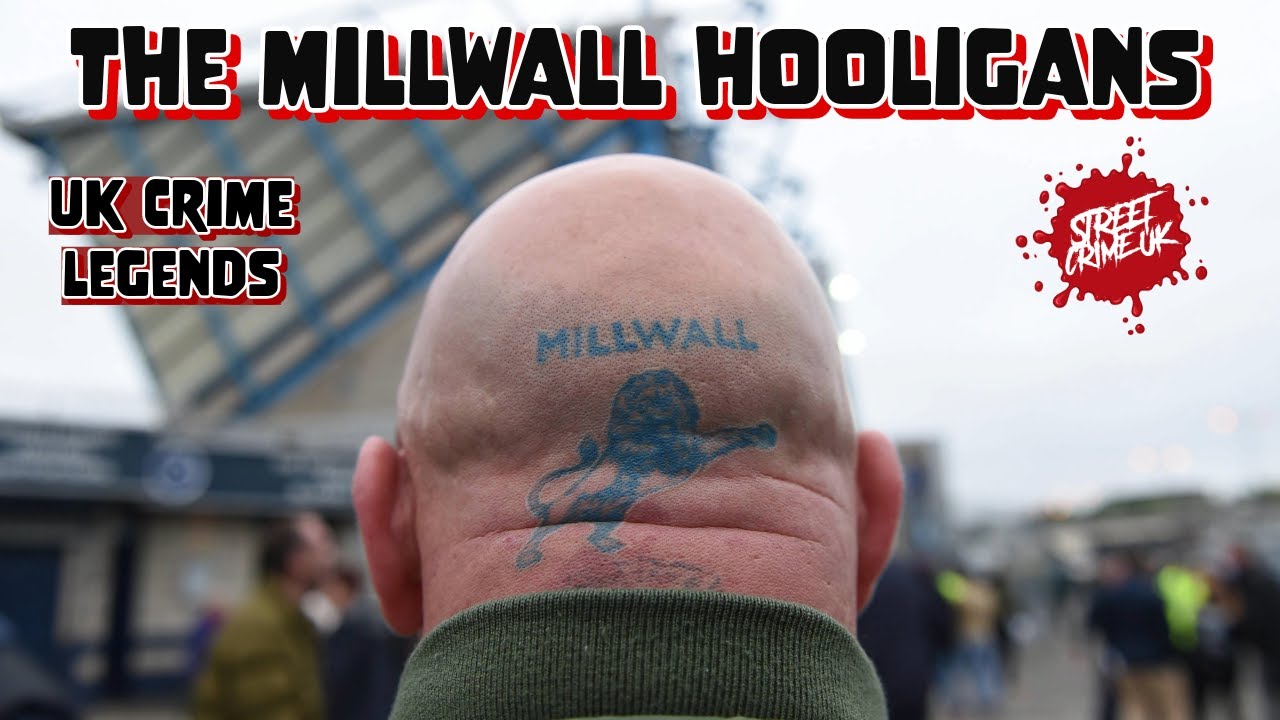
For Millwall, the relationship between a football club and its reputation is the central issue. The documentary places organised disorder beside the lives of supporters for whom the club represents loyalty, place and belonging. It looks back to the growth of hooliganism in the 1960s and 1970s, then turns to the institutional response: policing, exclusions and community engagement. The question is how a club addresses violence while preserving the culture that makes people care about it.
The club and the firm
The Millwall Bushwackers appear within the film’s account of football disorder in the later twentieth century. Their story is located in the club’s working-class South East London setting, but the setting is not an explanation for every supporter’s behaviour. A hooligan group, a club and a fan base are different things, even when public debate compresses them into one name.
Why Luton remains a reference point
The disorder at the 1985 match against Luton Town is the documentary’s clearest historical landmark. It illustrates how a single event can become shorthand for a much larger institution. In the narrative, the consequences extend beyond the immediate disturbance to condemnation, pressure for stronger controls and an image of Millwall that later supporters would continue to encounter.
Two kinds of response
Police cooperation and bans are one part of the response described in the film. Alongside enforcement, initiatives aimed at younger supporters, inclusion and a better matchday experience offer another approach. They address different parts of the problem: one limits the opportunities of people causing harm; the other develops a positive place for supporters within the club and its community.
Changing behaviour and changing an image
A reputation can persist after practices begin to change. That gap gives the film its wider significance. The documentary presents community work as an attempt to influence what supporting Millwall means, rather than simply to improve publicity. Its account also leaves room for continuing difficulty: progress does not make every later incident disappear, and one later incident cannot stand for the whole club.
THREE QUESTIONS THE FILM RAISES
- How does the film distinguish the Bushwackers from Millwall’s wider support?
- Why does the Luton match occupy such a large place in the account of the club’s reputation?
- What different problems are community programmes and exclusions intended to address?
Based on Street Crime UK’s official YouTube description. Documentary published 27 February 2024. This is an archive companion, not a report of present circumstances.
Original film & channel descriptionSuggest a correction